


Somnath — Faith by the Sea
On our return, we drove 430–460 km (9–10 hours) from Dholavira to the sacred Somnath Temple.
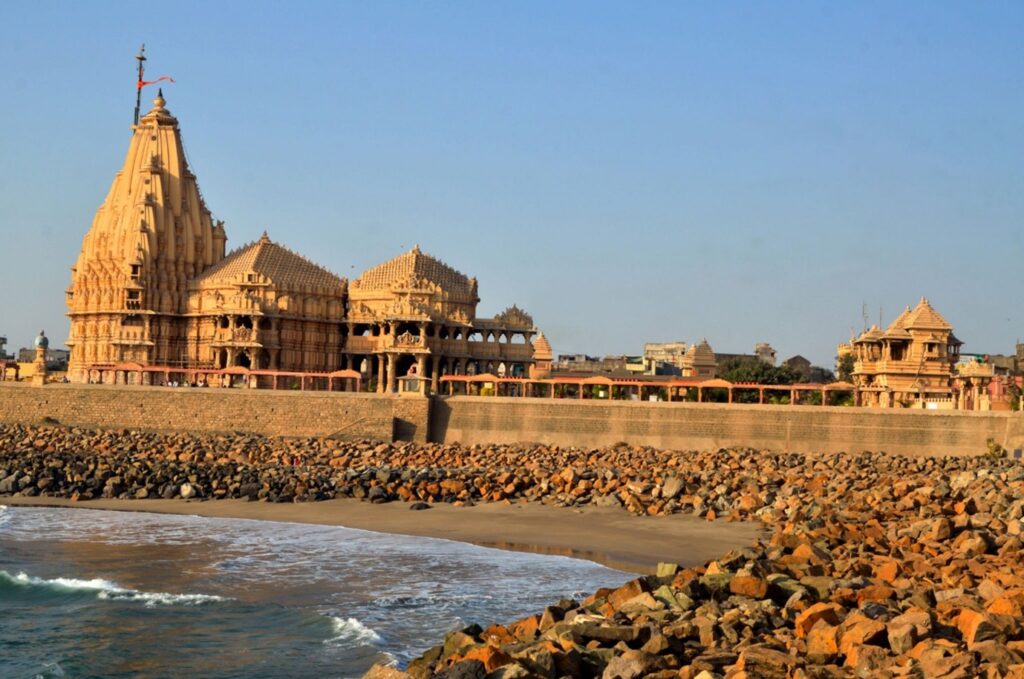
Standing proudly on the edge of the Arabian Sea, the Somnath Temple is far more than a place of worship — it is a symbol of unwavering faith, resilience, and spiritual continuity. For centuries, Somnath has drawn pilgrims, seekers, and travellers who come not just to pray, but to feel the weight of history and devotion carried by its stones.
Dedicated to Lord Shiva, Somnath is revered as the first of the twelve Jyotirlingas, the most sacred manifestations of Shiva in Hinduism. According to legend, the temple was originally built by Soma, the Moon God, and rebuilt multiple times over the ages — each reconstruction symbolising renewal, much like the cosmic cycle Shiva himself represents.
Historically, Somnath has witnessed repeated destruction and rebirth. Invaded and damaged several times during medieval periods, most notably in the 11th century, the temple was never abandoned by faith. Each time it was rebuilt, it stood as a quiet yet powerful statement — that belief cannot be erased. The present structure, reconstructed in 1951 after India’s independence under the inspiration of Sardar Vallabhbhai Patel, reflects both spiritual revival and national pride.
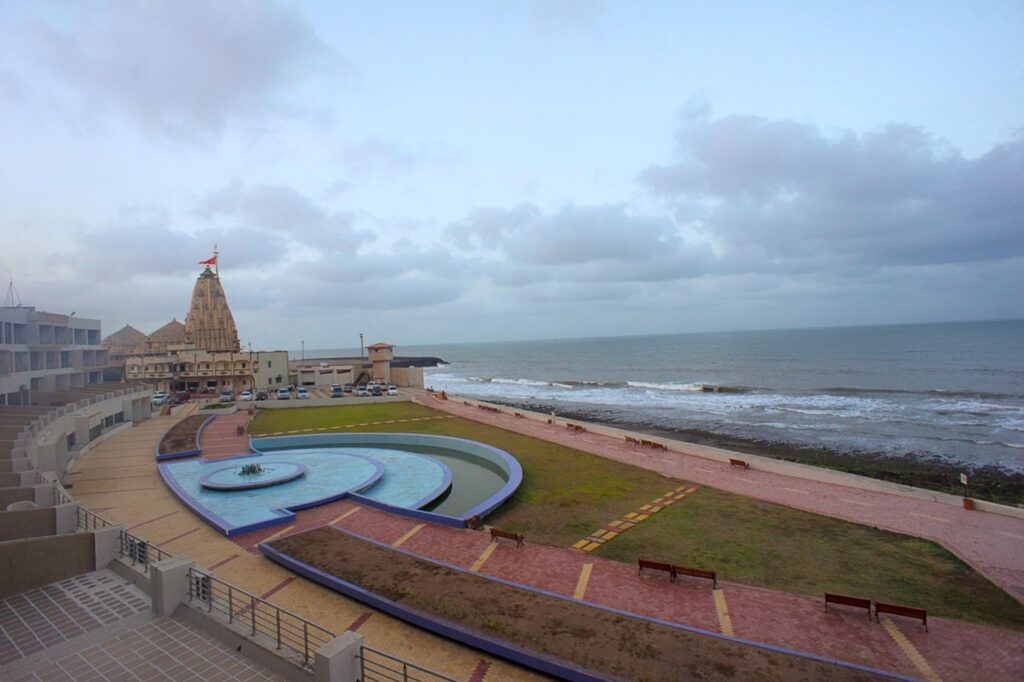
What makes Somnath especially moving is its setting. As waves crash endlessly against the shore, the temple seems to remind visitors of the eternal — time passes, empires rise and fall, but devotion endures. Watching the evening aarti here, with chants blending into the sound of the sea, is an experience that stays with you long after you leave.
Somnath is not just a destination on a map — it is a reminder that faith, like the ocean beside it, remains vast, timeless, and unbroken.
Watching the evening aarti as waves crashed nearby was deeply moving. After days of travel, Somnath brought stillness — a quiet moment of gratitude.