


12/02/23 — Jaipur: Royal Grandeur & Pink City Magic
Sightseeing began in Jaipur, where Rajasthan wears its crown proudly.
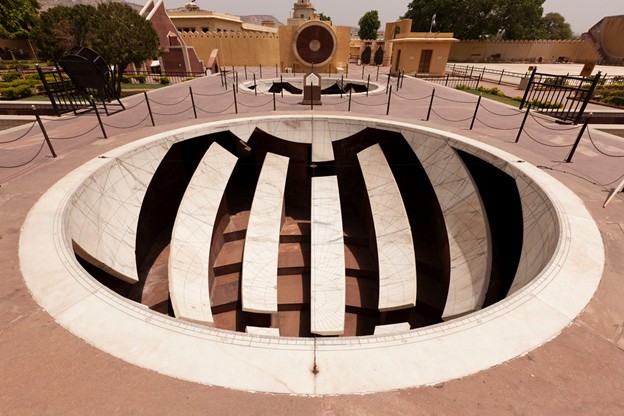
We stood in awe at Amber Fort, peered through the honeycomb windows of Hawa Mahal, and wandered royal corridors inside City Palace. Kanubhai soaked up the history at Jantar Mantar, while Jay and Sarla hunted the best skyline photos.
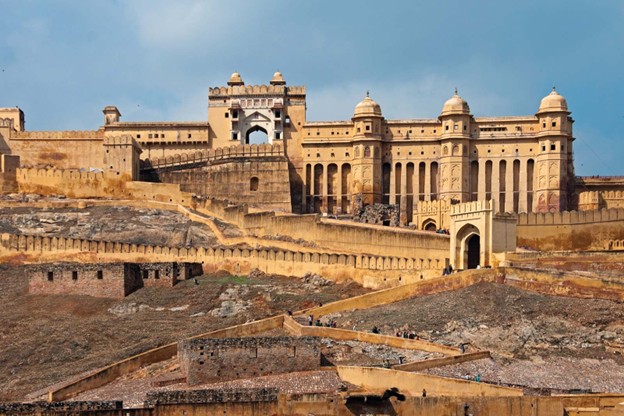
Amber Fort — Where Rajput Power Meets Mughal Elegance
Perched high on a rocky ridge just outside Jaipur, Amber Fort (also spelled Amer Fort) stands as one of Rajasthan’s most magnificent symbols of royal ambition and artistic refinement.
The fort was founded in 1592 by Raja Man Singh I, a trusted Rajput commander in Emperor Akbar’s Mughal court. Built on the site of an earlier stronghold, Amber became the capital of the Kachwaha Rajputs long before Jaipur was established. Over the next century, successive rulers expanded it into the sprawling palace-fort complex seen today.
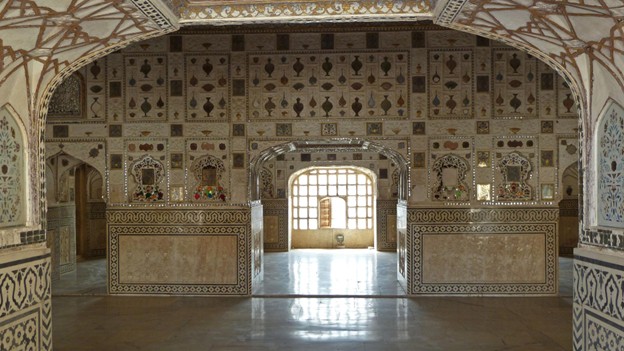
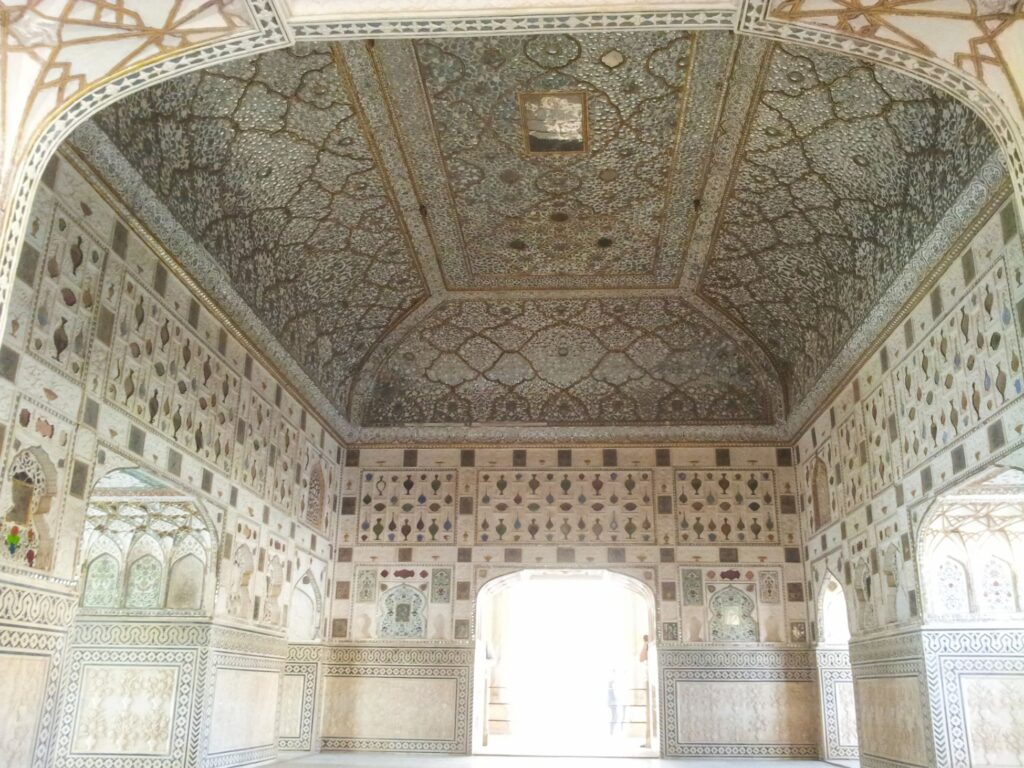
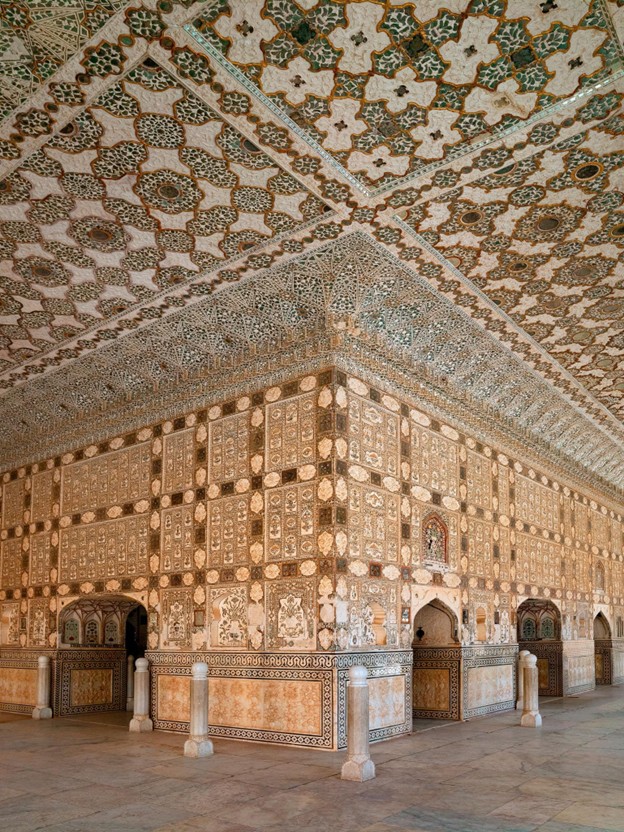
Unlike many purely military forts, Amber was designed as both a defensive fortress and a luxurious royal residence. Its massive sandstone walls conceal elegant courtyards, ornate gateways like Ganesh Pol, and exquisite palaces. The most famous is the Sheesh Mahal (Mirror Palace), where thousands of tiny mirrors were set into marble so that a single candle could illuminate the entire hall — a dazzling display of craftsmanship.
Architecturally, Amber Fort reflects a graceful fusion of Rajput strength and Mughal sophistication. Mughal-style gardens, marble pavilions, and decorative arches blend seamlessly with traditional Rajput ramparts and watchtowers. From its terraces, the rulers once surveyed trade routes and protected their kingdom, while inside, royal families lived amid fountains, frescoes, and carved pillars.
When Maharaja Sawai Jai Singh II founded Jaipur in 1727, Amber lost its status as capital, but it never lost its prestige. Today, Amber Fort stands as a living museum of Rajasthan’s golden age — telling stories of alliances, warfare, romance, and royal ceremony, all framed by sweeping views of the surrounding hills and Maota Lake below.
In essence, Amber Fort isn’t just stone and marble — it is the birthplace of Jaipur’s royal legacy and one of India’s finest examples of hill-fort architecture.
Hawa Mahal — The Palace That Breathes
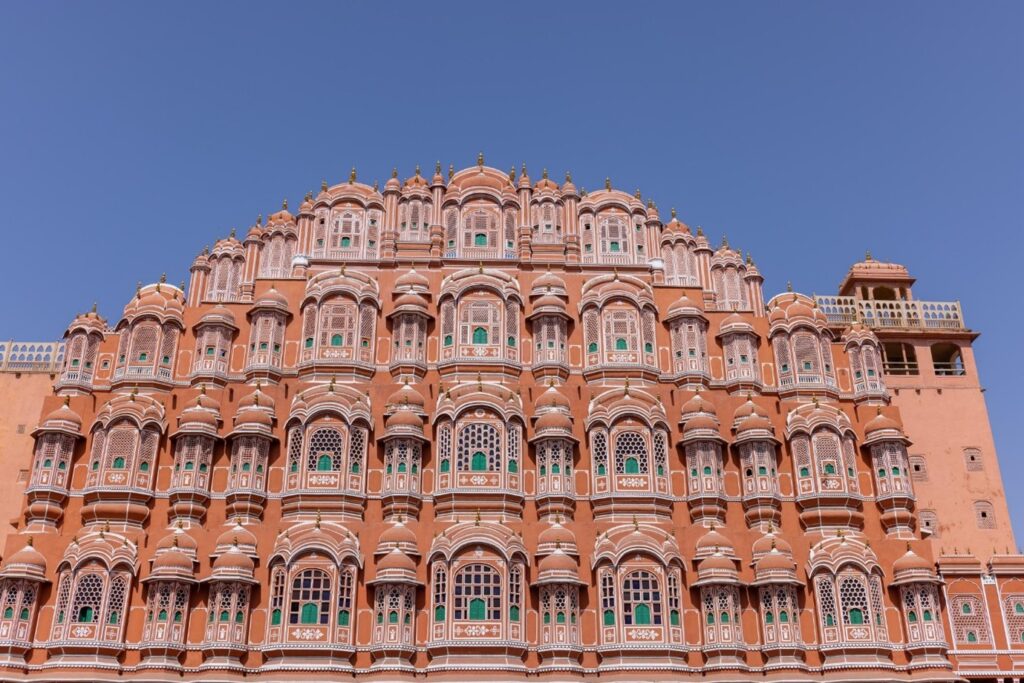
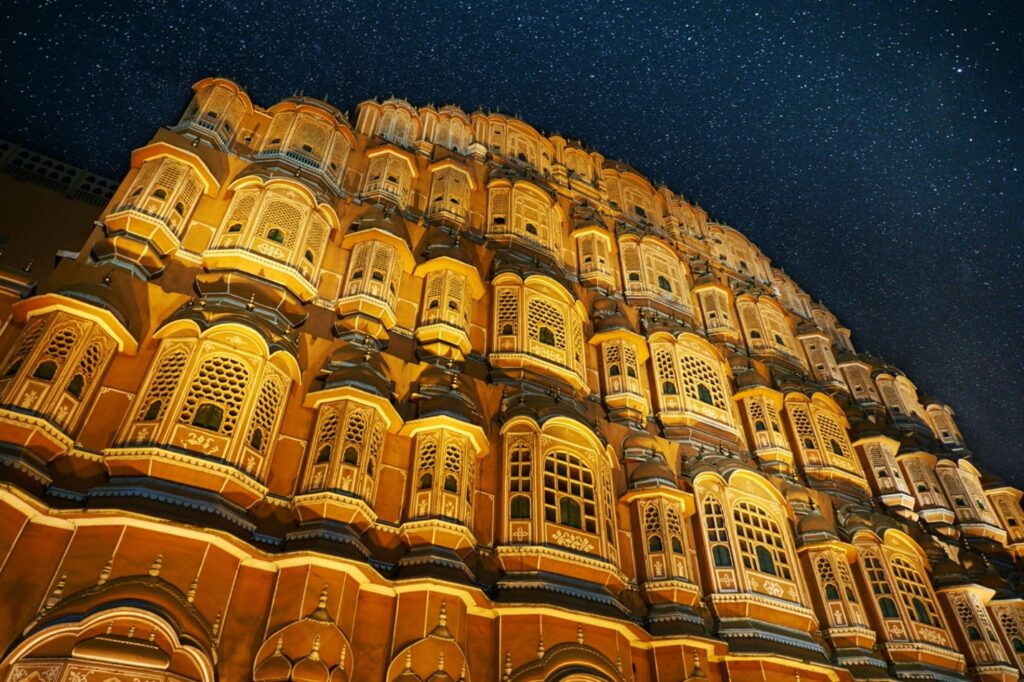
Rising like a pink sandstone crown above the busy streets of Jaipur, Hawa Mahal is one of Rajasthan’s most instantly recognizable landmarks. Built in 1799 by Maharaja Sawai Pratap Singh, it was designed as an extension of the City Palace — not as a residence, but as a royal viewing gallery.
Its name means “Palace of Winds,” and for good reason.
The five-storey façade is made up of 953 tiny jharokha windows, arranged in a delicate honeycomb pattern. These latticed openings allowed cool desert breezes to flow through the structure, naturally air-conditioning the interior long before electricity existed. This clever design kept the palace comfortable even during Jaipur’s intense summers.
But Hawa Mahal served a deeper cultural purpose.
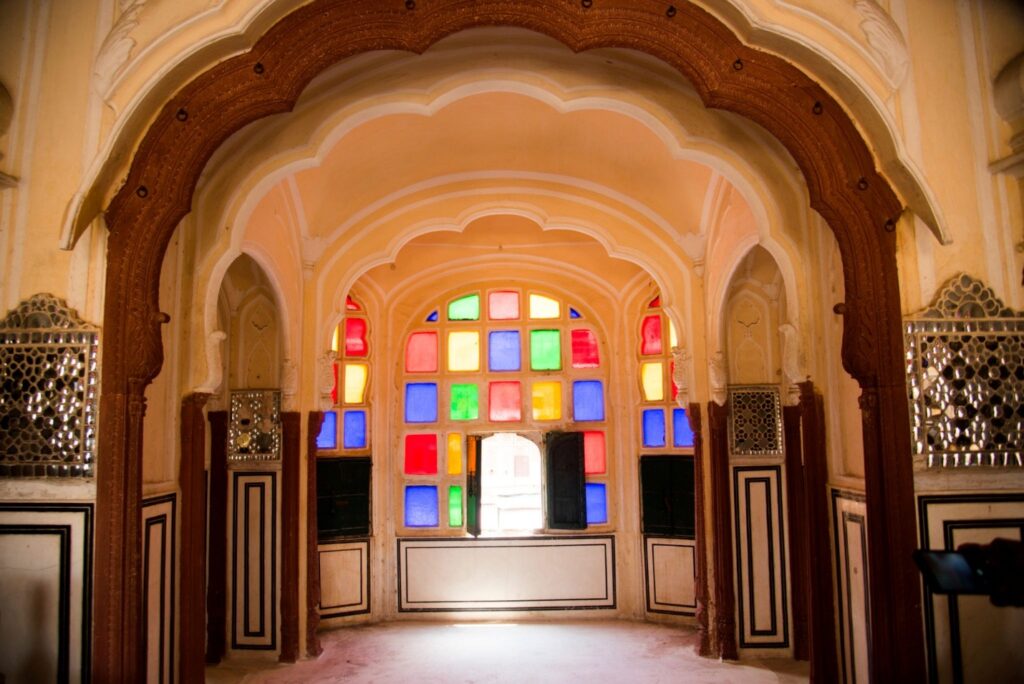
Following the strict customs of purdah, royal women were not permitted to appear in public. From behind these screened windows, queens and princesses could quietly observe street festivals, royal processions, and everyday life below — unseen, yet connected to the world outside.
Unlike Jaipur’s grand forts, Hawa Mahal has no large halls or courtyards. Instead, it contains narrow passages and small chambers that lead upward to hidden terraces offering sweeping views over the Pink City. Architecturally, it blends Rajput decorative style with Mughal arches and floral motifs, all crafted from Jaipur’s signature rose-colored sandstone.
Today, Hawa Mahal stands as a poetic symbol of Jaipur — graceful, intelligent in design, and layered with history. It is less a palace of power, and more a palace of perspective: built for watching, breathing, and quietly witnessing the rhythm of royal India.
City Palace — The Living Heart of Jaipur’s Royal Legacy
At the very center of Jaipur stands City Palace — not just a monument, but a living symbol of Rajasthan’s royal heritage.
The palace complex was founded in 1727 by Maharaja Sawai Jai Singh II, the visionary ruler who also designed Jaipur as India’s first planned city. When he moved his capital from Amber to Jaipur, City Palace became the seat of power for the Kachwaha Rajput dynasty — a role it still partially holds today, with members of the royal family residing within its walls.
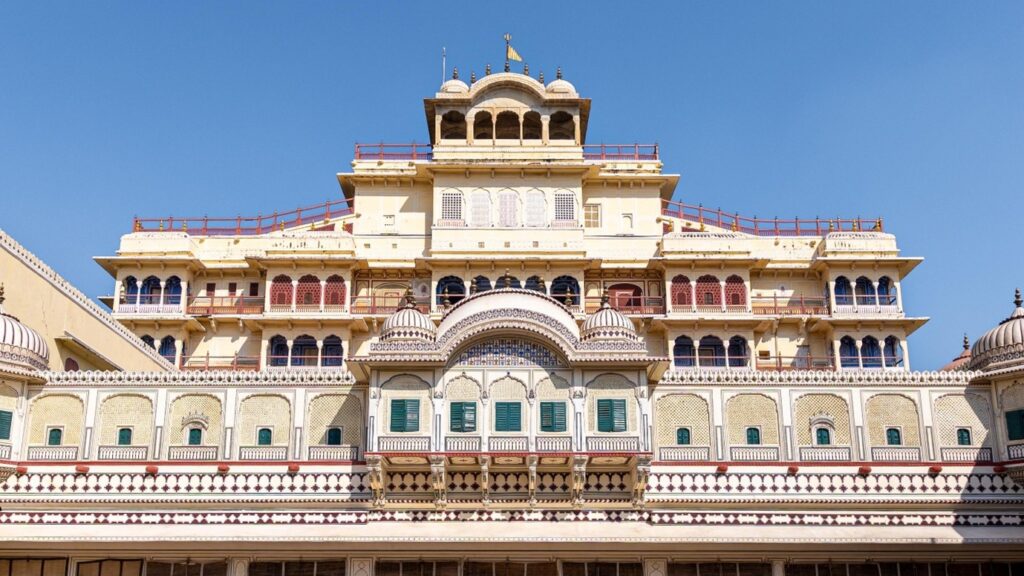
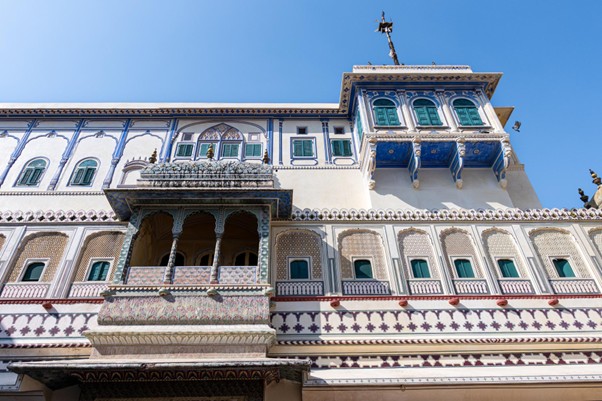
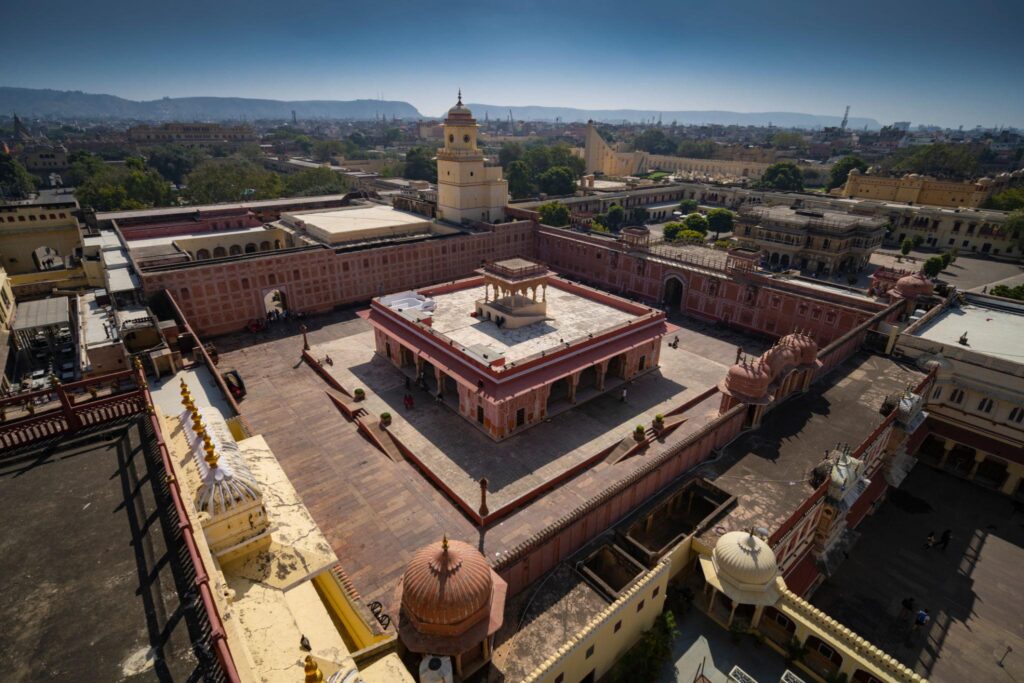
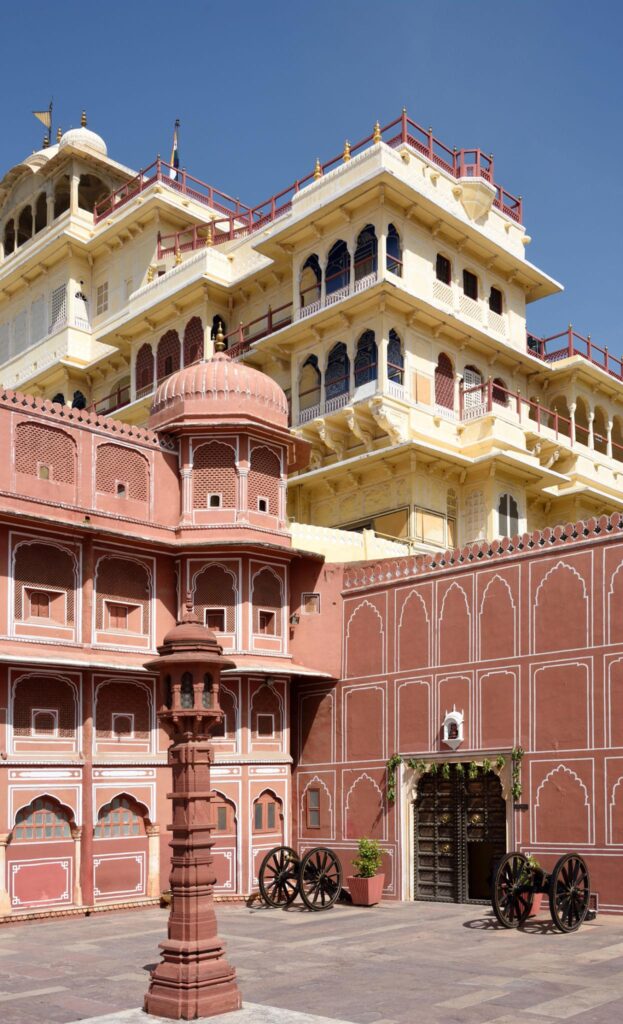
Rather than being a single building, City Palace is a grand ensemble of courtyards, gardens, pavilions, and palaces. Its architecture beautifully blends Rajput tradition with Mughal elegance — carved arches, marble balconies, painted ceilings, and ornamental gateways all come together in harmonious balance.
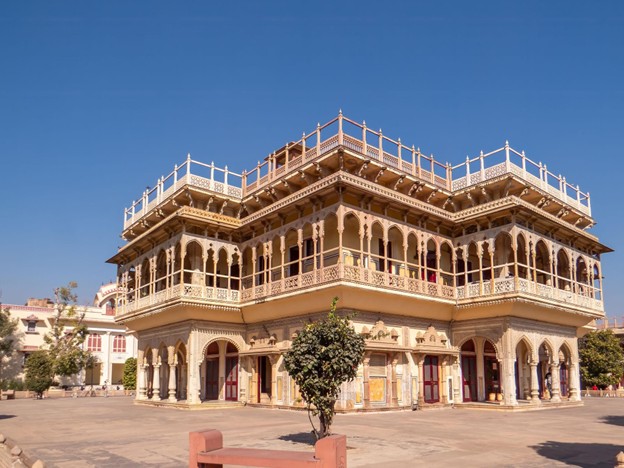
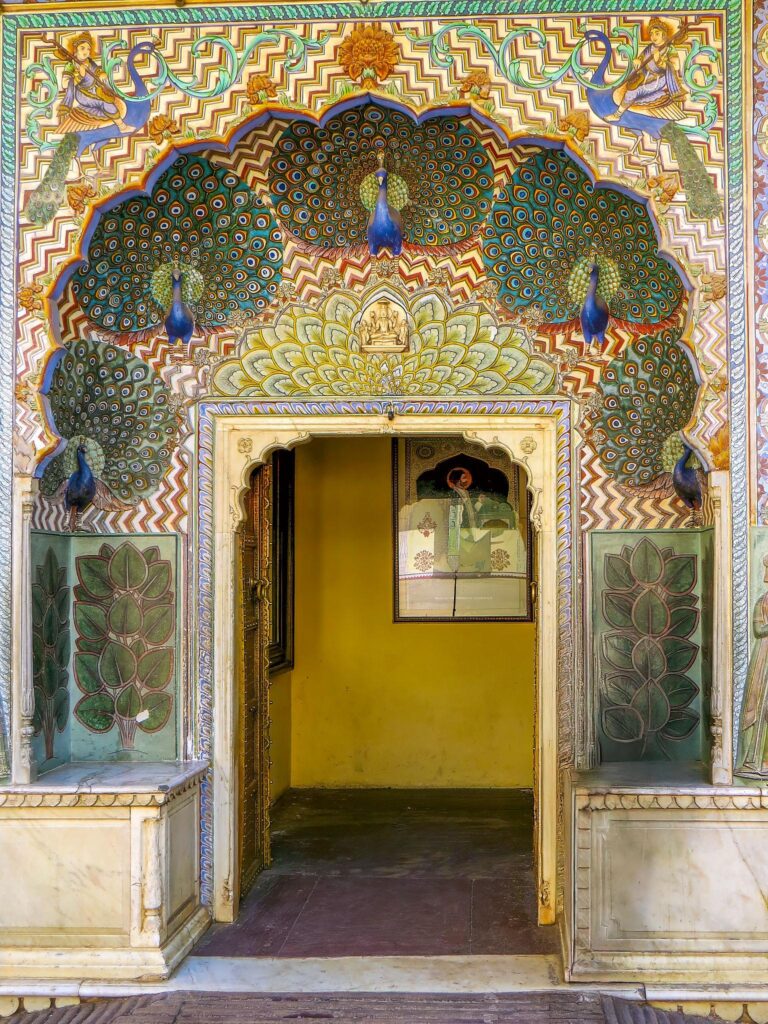
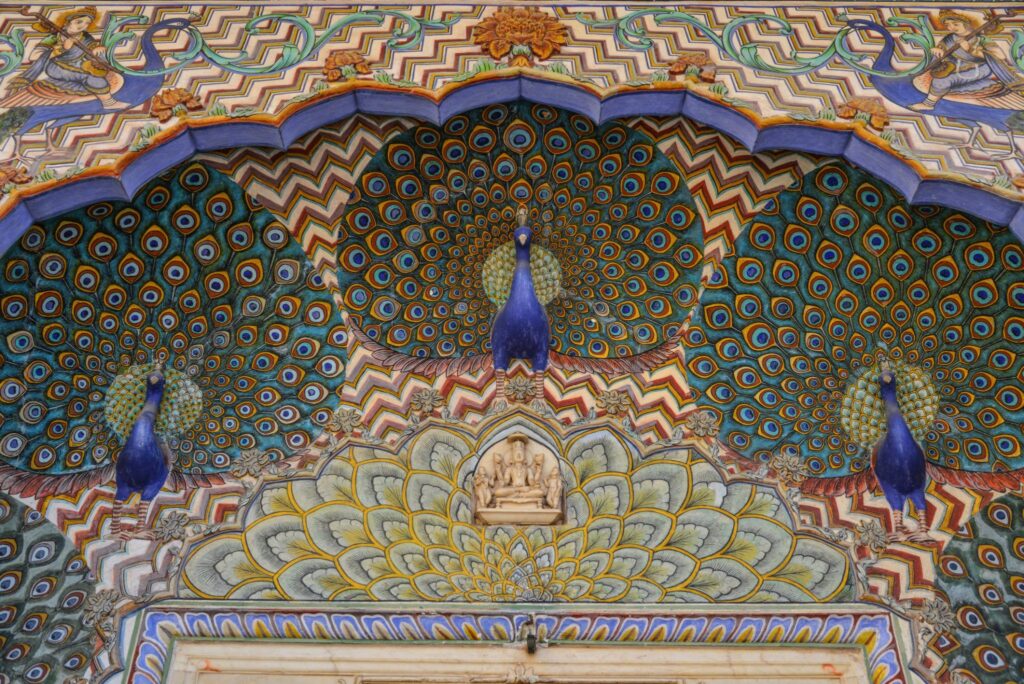
Among its most striking features is the Pritam Niwas Chowk, famous for its four decorative gates, each representing a different season. Nearby, Mubarak Mahal now serves as a museum displaying royal costumes and textiles, while Chandra Mahal rises above the complex, offering sweeping views of Jaipur’s Pink City from its upper floors.
City Palace was designed not only for ceremony and governance, but also for refined living — a place where rulers held court, celebrated festivals, and welcomed foreign dignitaries. Inside its galleries today are preserved palanquins, weapons, manuscripts, and artwork that quietly narrate centuries of royal life.
More than stone and marble, City Palace tells the story of Jaipur itself — a city born of ambition, symmetry, and cultural pride. Walking through its courtyards feels like stepping into a chapter of living history, where past and present continue to coexist under Rajasthan’s brilliant sun.
Jantar Mantar — Where Jaipur Measured the Cosmos
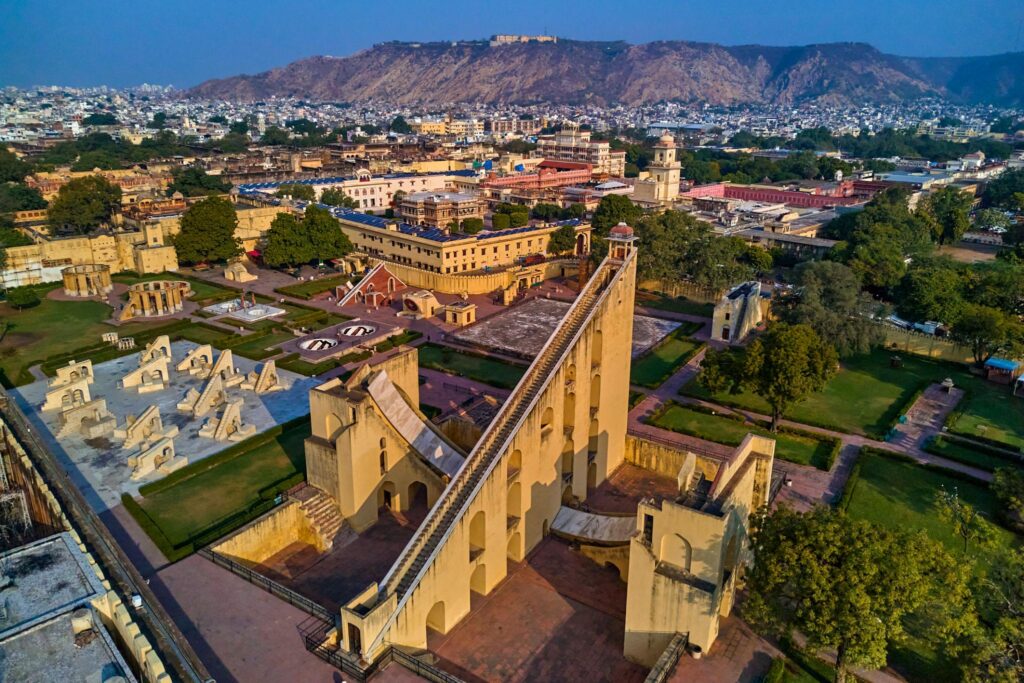
Hidden in plain sight beside the City Palace in Jaipur, Jantar Mantar is not a palace, temple, or fort — it is a monumental astronomical laboratory, built when kings still studied the stars.
Constructed between 1724 and 1734 by Maharaja Sawai Jai Singh II, Jantar Mantar reflects the ruler’s deep passion for science and celestial observation. Jai Singh II was not only a warrior-king but also a scholar who wanted precise astronomical data to improve calendars, predict eclipses, and determine auspicious timings for rituals and state affairs.
The Jaipur observatory is the largest and best preserved of the five Jantar Mantars he built across India.
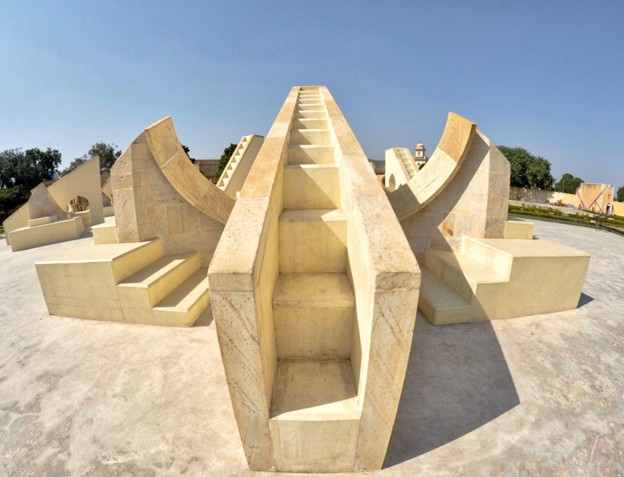
Inside its walls stand giant geometric instruments, each designed for a specific purpose — measuring time, tracking planetary movement, calculating solstices, and mapping constellations. The most striking is the Samrat Yantra, a massive stone sundial so accurate it can measure time to within seconds using nothing but sunlight and shadow.
Unlike modern observatories filled with lenses and computers, Jantar Mantar relies entirely on scale, geometry, and the sky itself. Every structure is aligned with remarkable precision, turning architecture into scientific equipment — a rare fusion of art and astronomy.
Today, Jantar Mantar stands as a quiet reminder of India’s advanced scientific heritage. Amid Jaipur’s bustling streets, it offers a moment of stillness — a place where time slows, shadows move gently, and visitors can stand exactly where astronomers once read the heavens.
More than stone instruments, Jantar Mantar represents a bold idea: that knowledge of the universe belongs not just to scholars, but to cities, cultures, and generations.
That evening, Girish and Bharti led us into Jaipur’s buzzing bazaars, Kishor and Hema sampled every snack in sight, and Mahesh and Hansa made sure nobody got lost. We ended the day with rooftop dinner views before sinking into our 4★ hotel beds — excited for what lay ahead.