


Mehrangarh Fort — Guardian of the Blue City
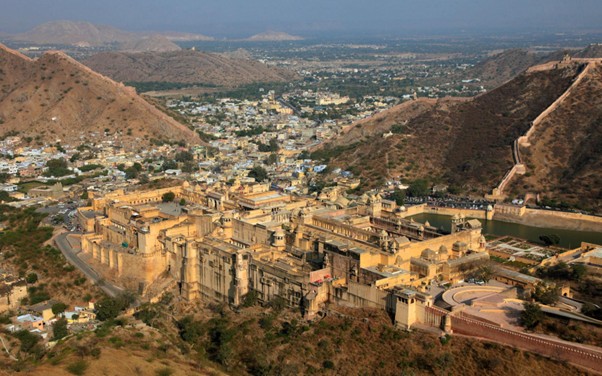
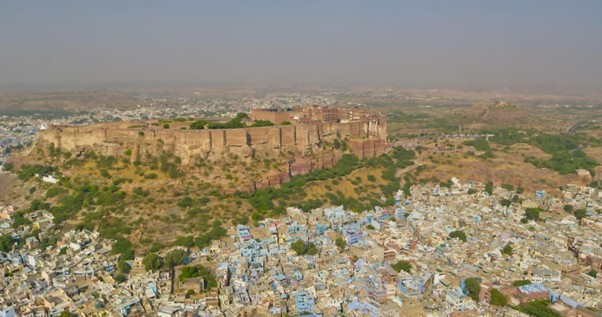
High above the desert plains of Jodhpur, perched dramatically on a rocky hill called Bhakurcheeria — “the mountain of birds” — rises the mighty Mehrangarh Fort. Its commanding presence has watched over the region for more than five centuries.
The story of Mehrangarh begins in 1459 CE, when Rao Jodha, ruler of the Rathore Rajputs, decided to move his capital to this strategic high ground. From here, enemies could be spotted miles away, and the fort’s sheer cliffs provided natural protection. At the same time, Rao Jodha founded the city of Jodhpur below, creating a royal stronghold that would shape Marwar’s destiny.
Over the next 500 years, successive Rathore rulers transformed Mehrangarh into the vast architectural marvel we see today. Towering walls — some rising nearly 36 meters — were reinforced with massive gates, each marking an important victory or royal milestone. Among them stands Jayapol, the Victory Gate, built after triumphs over Jaipur forces, and Fatehpol, commemorating victories against Mughal armies.
Remarkably, Mehrangarh was never fully conquered in battle.
Although it was briefly occupied during Mughal campaigns in the 16th century, the fort returned to Rathore control through political alliances and royal marriages. Its true golden age arrived in the 17th century under Maharaja Jaswant Singh I, when elegant palaces such as Moti Mahal (Pearl Palace) and Phool Mahal (Flower Palace) were added. These richly decorated halls reveal a graceful blend of Mughal artistry and Rajput craftsmanship — mirrors, frescoes, and carved ceilings reflecting royal life at its finest.
By the late 19th and early 20th centuries, Jodhpur’s rulers shifted their residence to Umaid Bhawan Palace, and Mehrangarh slowly transitioned from royal home to ceremonial stronghold. Today, it stands proudly as one of India’s best-preserved forts, housing an exceptional museum filled with palanquins, weapons, textiles, paintings, and royal artifacts.
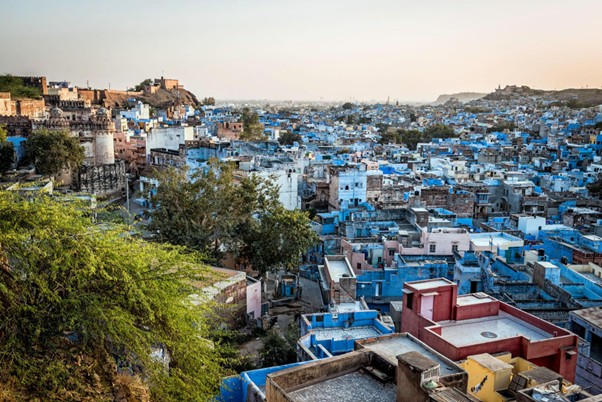
From its ramparts, visitors still enjoy breathtaking views over Jodhpur’s famous Blue City — a sea of indigo rooftops stretching into the desert haze.
Mehrangarh is more than stone walls and towering gates. It is a living chronicle of Marwar’s military strength, artistic brilliance, and royal legacy — a place where every courtyard whispers stories of power, resilience, and timeless beauty.
Jaswant Thada — Jodhpur’s Marble Whisper of Remembrance
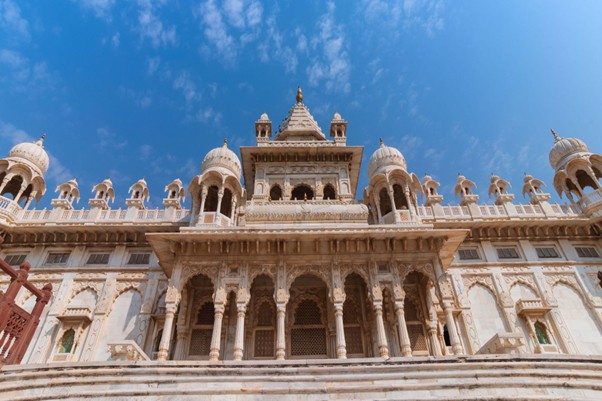
Tucked quietly beneath the towering cliffs of Mehrangarh Fort, the serene white monument of Jaswant Thada offers a gentle contrast to the power and grandeur of Rajasthan’s warrior past.
Built in 1899 by Maharaja Sardar Singh in memory of his father, Maharaja Jaswant Singh II, Jaswant Thada was conceived not as a grand tomb, but as a cenotaph — a memorial without remains — designed purely for reflection and remembrance. Jaswant Singh II was one of Jodhpur’s most respected rulers, known for his progressive reforms and compassionate leadership, and this graceful monument reflects that spirit.
Crafted entirely from finely polished Makrana marble, Jaswant Thada is often lovingly called the “Taj Mahal of Marwar.” The marble is so delicately worked that sunlight filters through in places, bathing the interiors in a soft, almost ethereal glow. Ornate jali (lattice) screens, elegant domes, and manicured gardens surround a small reflective lake, creating an atmosphere of calm that feels worlds away from the bustling streets of Jodhpur below.
Beyond honoring Jaswant Singh II, Jaswant Thada also serves as the cremation memorial ground of the Marwar royal family. Nearby, several smaller chhatris commemorate later rulers, while inside the main pavilion hang portraits tracing generations of Jodhpur’s Rathore dynasty — quiet witnesses to centuries of royal history.
More than just a beautiful monument, Jaswant Thada represents a profound shift in royal expression — from conquest and defense to grace and memory. Set against the dramatic backdrop of Mehrangarh’s rocky ramparts, it symbolizes the softer, human side of Rajasthan’s kings, honoring legacy not through power, but through beauty, light, and silence.
Visiting Jaswant Thada feels like stepping into a pause in time — a place where marble whispers stories, and history is remembered with tenderness.
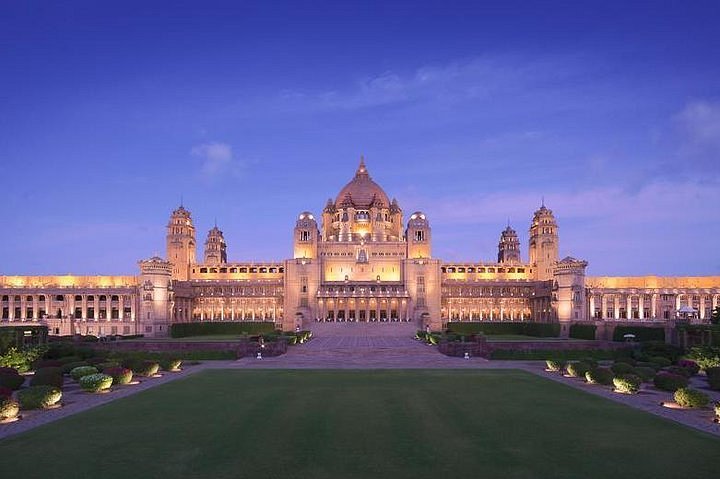
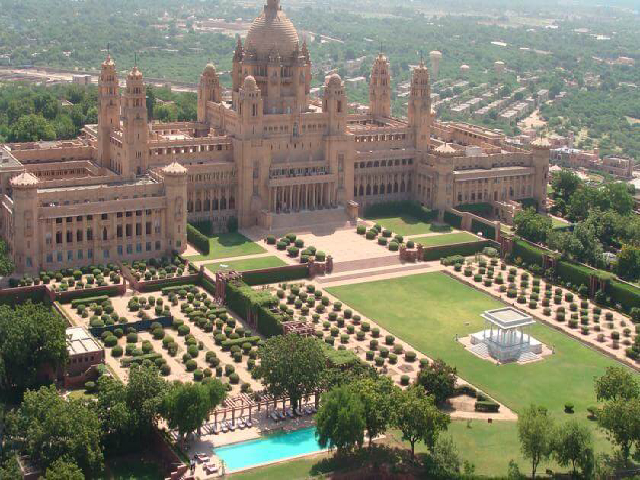
Umaid Bhawan Palace was commissioned in 1929 by Maharaja Umaid Singh during one of the worst droughts in Marwar’s history. What began as a royal dream quickly became a humanitarian project: the Maharaja ordered the palace built largely by hand, deliberately avoiding machinery so that thousands of local people could earn wages during years of famine. Construction lasted nearly 15 years, finally completing in 1943.
Rising above Jodhpur, the palace was crafted from golden Chittar sandstone and blends Indo-Saracenic design with strong Art Deco influences—a rare architectural combination in India. Its massive central dome, inspired by Roman and Renaissance forms, is balanced by sleek interiors, geometric floors, and elegant furniture that reflect early 20th-century modernism.
Unlike older Rajput forts built for defense, Umaid Bhawan was designed for comfort and ceremony. It marked a turning point in Jodhpur’s royal life, symbolizing peace-time prosperity rather than warfare. After independence, part of the palace became a museum, part remained the residence of the royal family, and part transformed into a luxury heritage hotel.
More than a palace, Umaid Bhawan stands as a monument to compassionate leadership—built not just to showcase royal grandeur, but to sustain a city in crisis. Its warm sandstone glow still tells that quiet story of resilience, generosity, and transition from warrior rule to modern royalty.
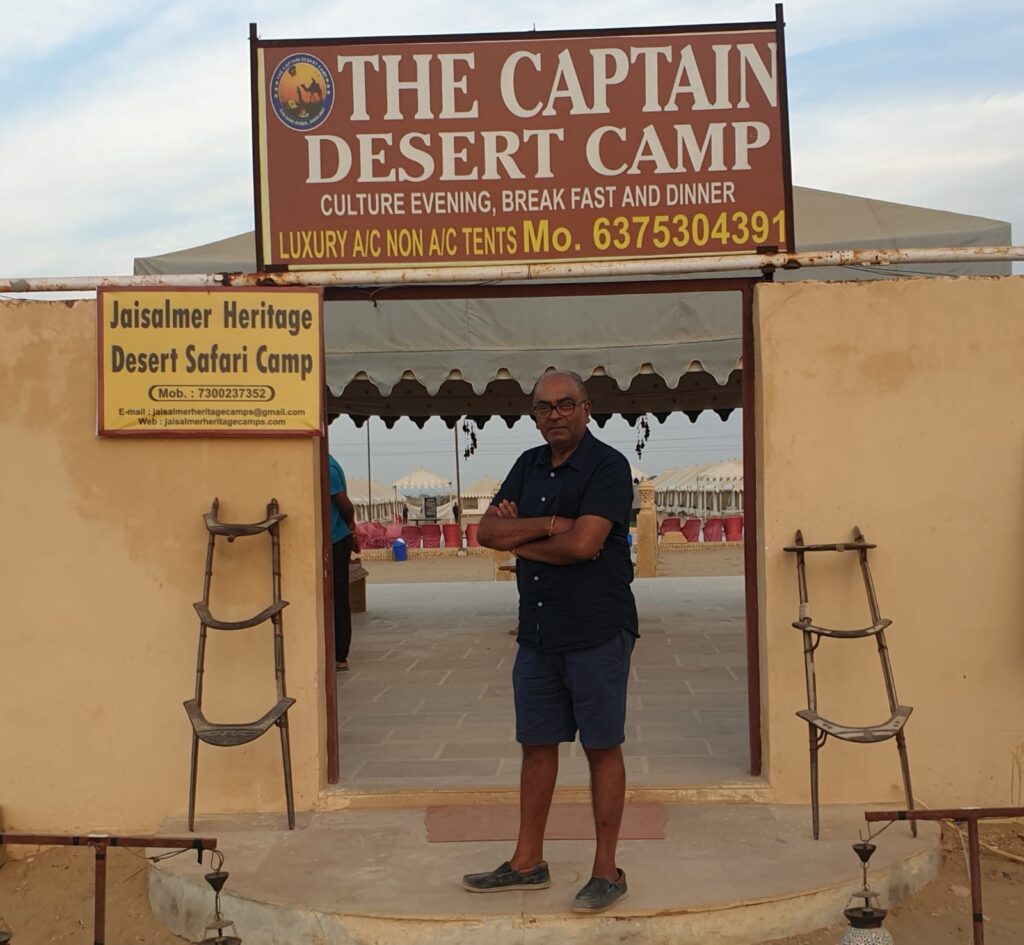
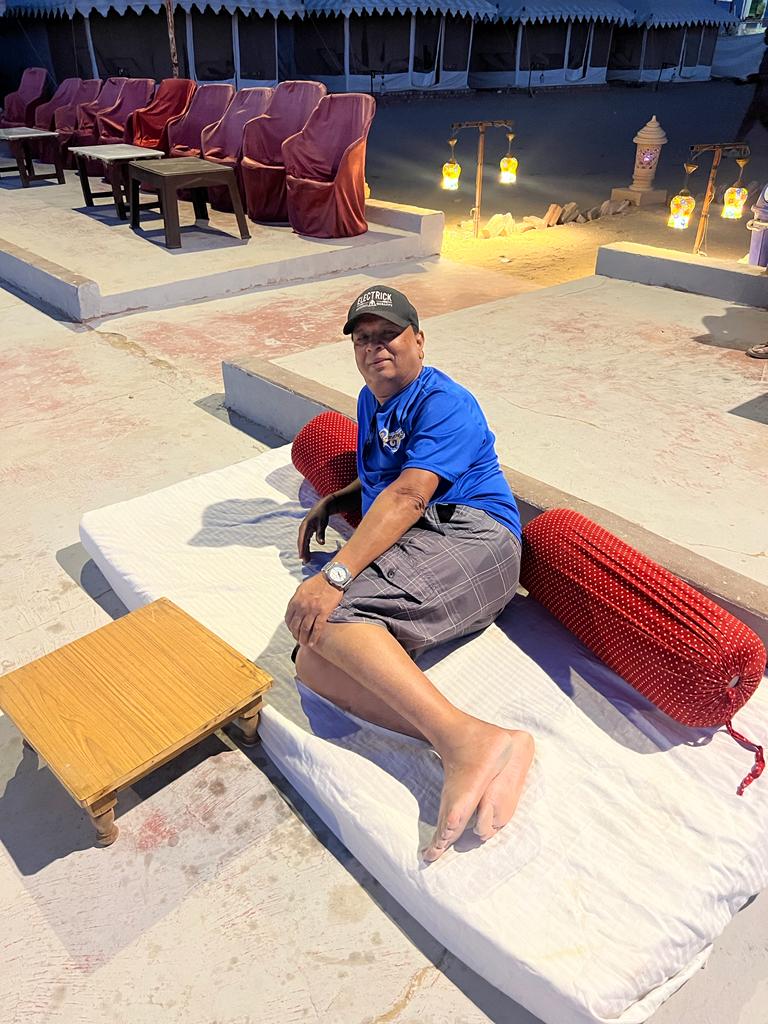
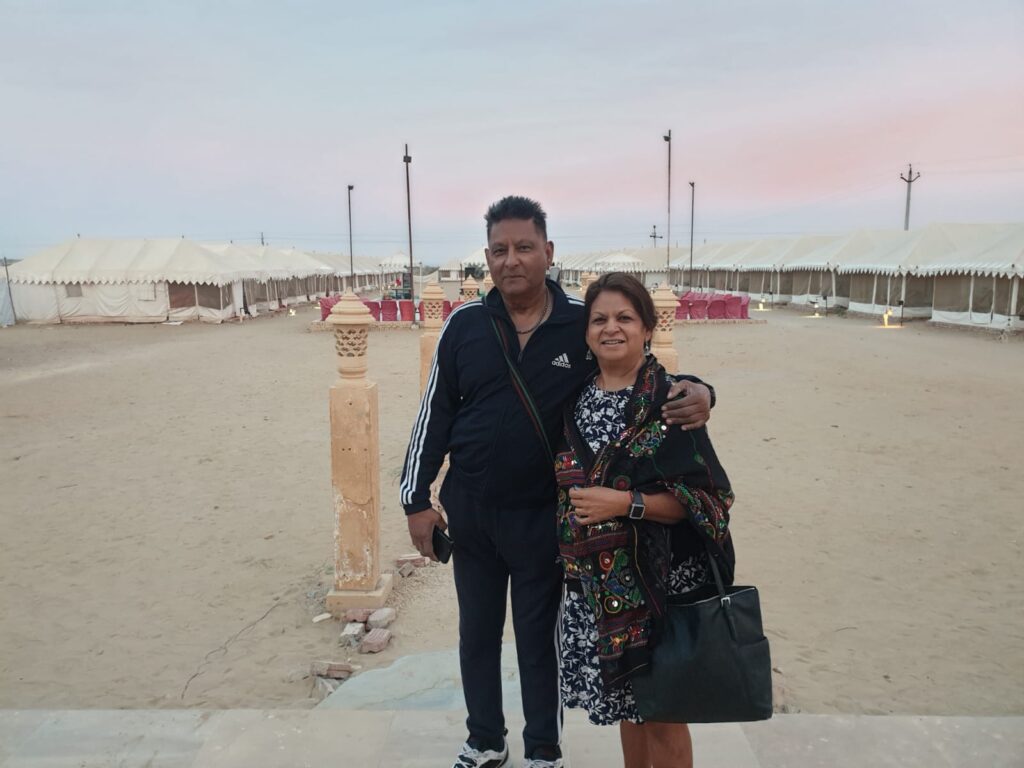
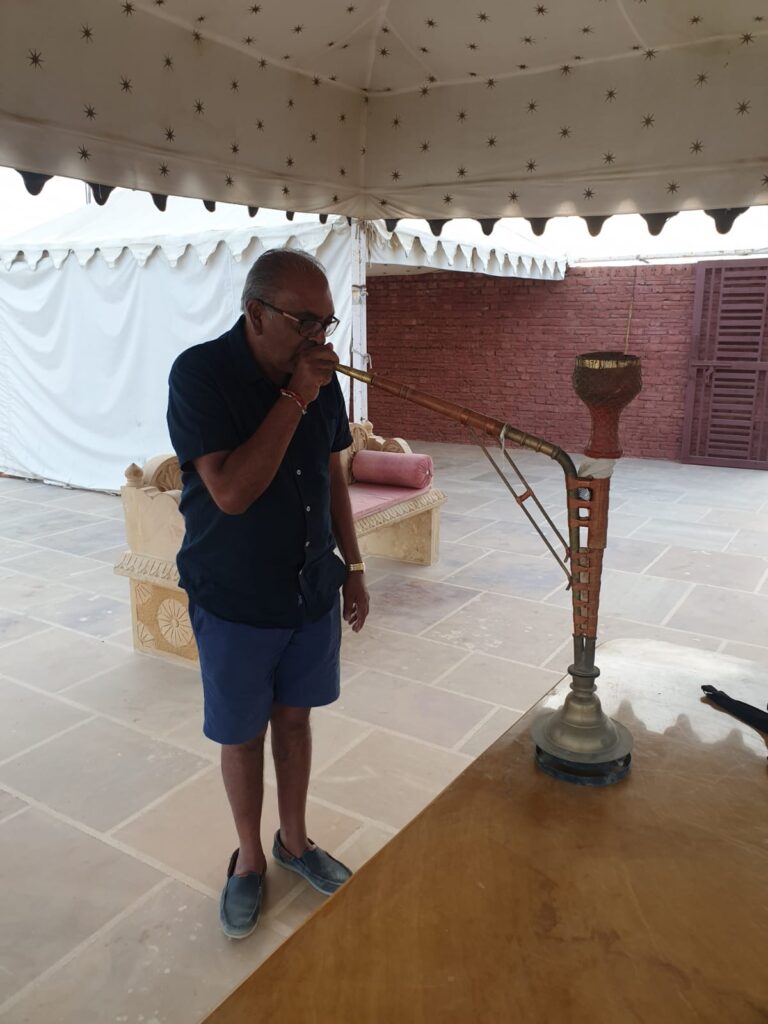
After an amazing day in Jodhpur, we drove to the desert in Jaisalmer 280km away that took us a good 6 hours. It was almost evening by the time we arrived here at The Captain Desert Camp.
Sand Dunes — Where the Thar Desert Comes Alive
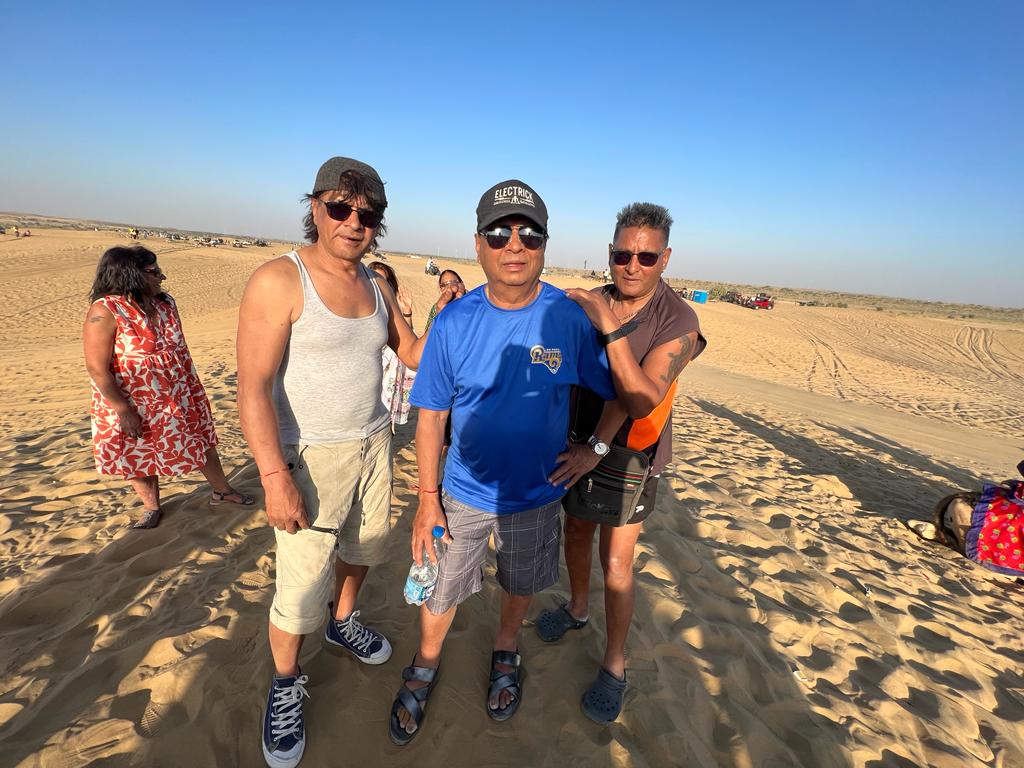
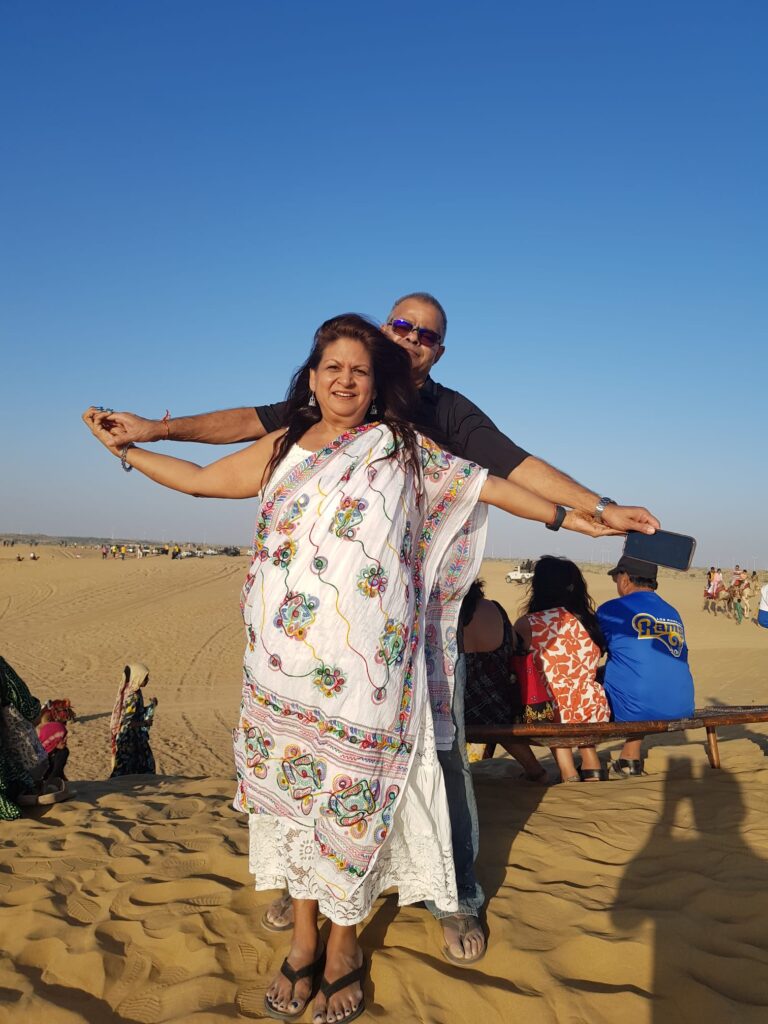
Just outside the Golden City of Jaisalmer, the rolling sands of Sand Dunes offer one of Rajasthan’s most unforgettable desert experiences. This is where the vast beauty of the Thar Desert truly reveals itself — endless golden waves, dramatic sunsets, and nights filled with music and stars.
For travelers, it is not just about seeing the desert — it’s about feeling it.
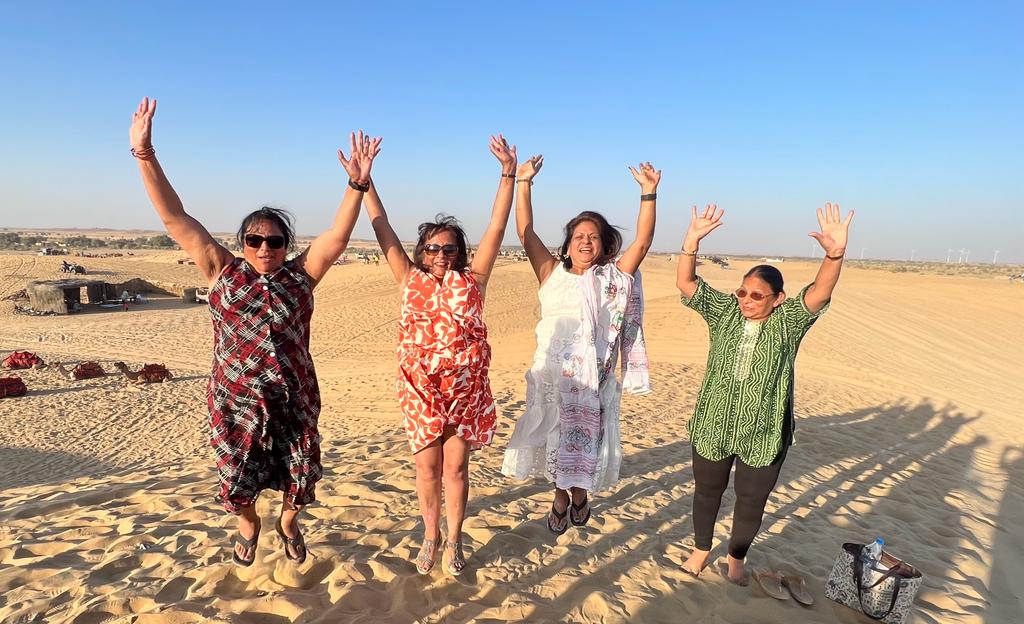
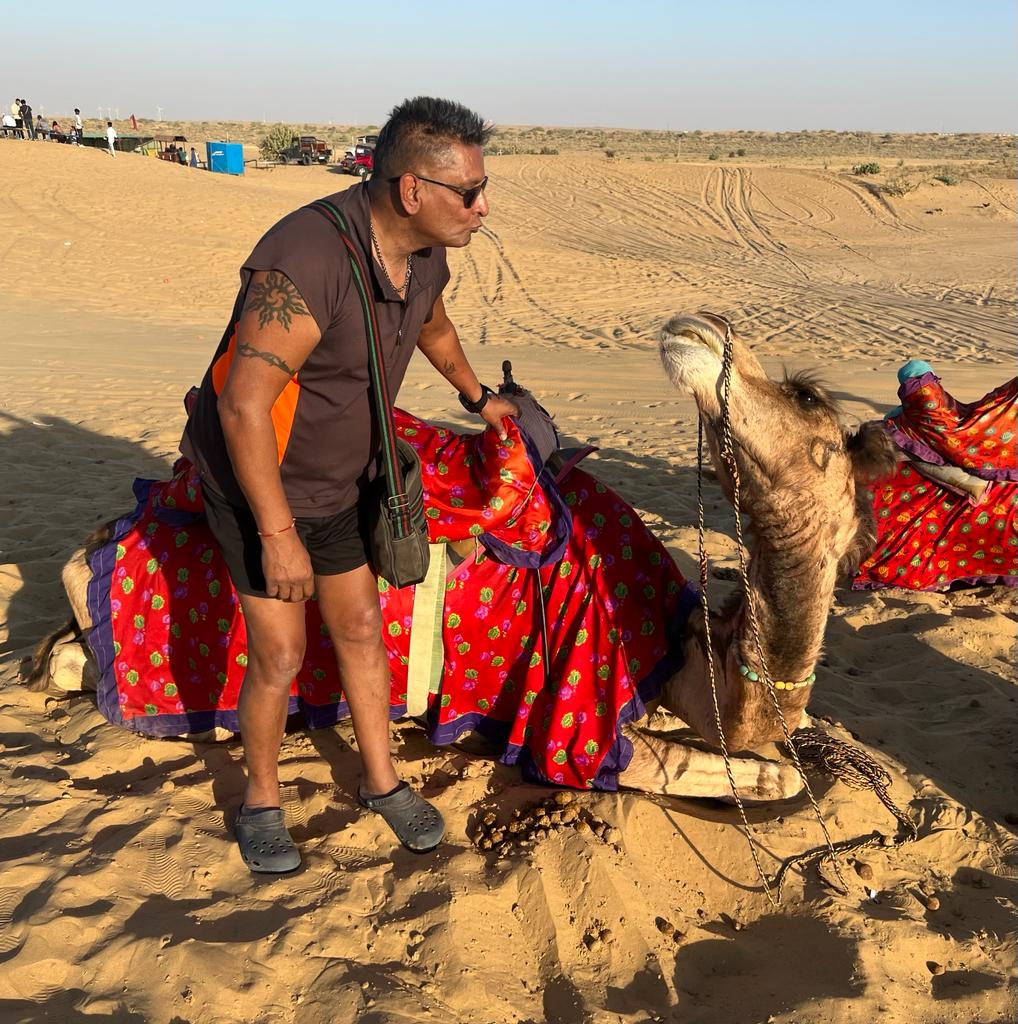
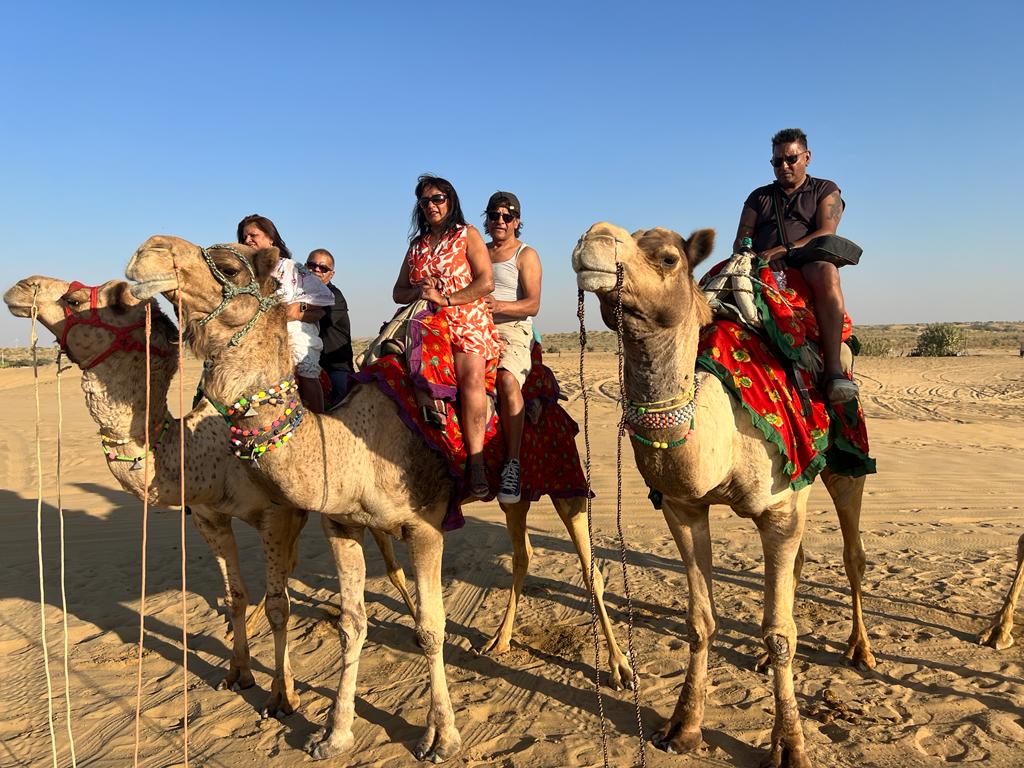
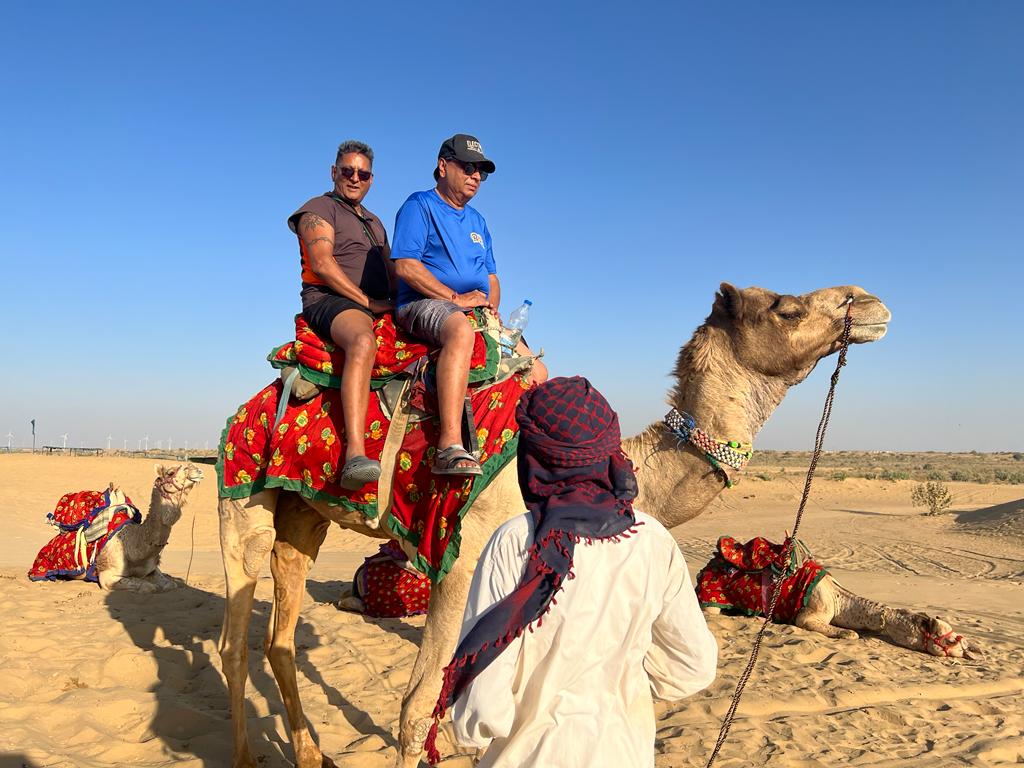
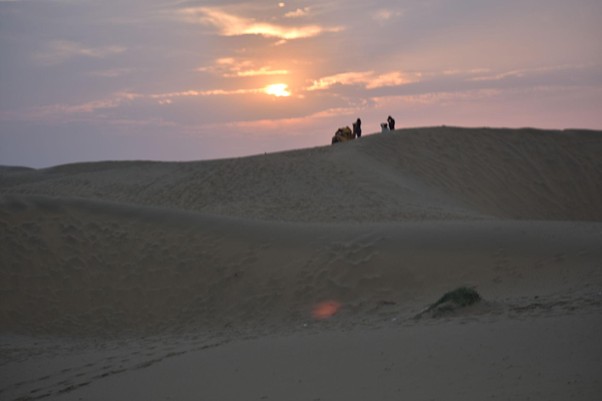
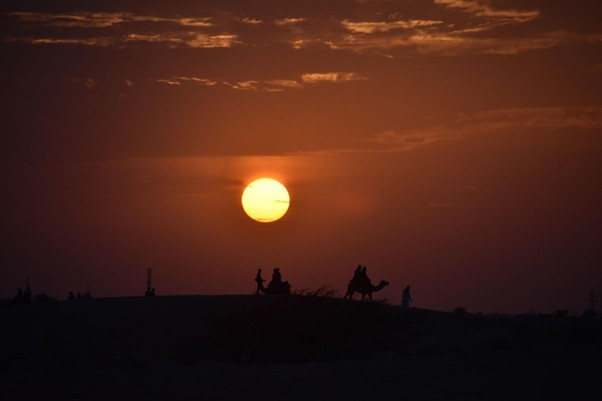
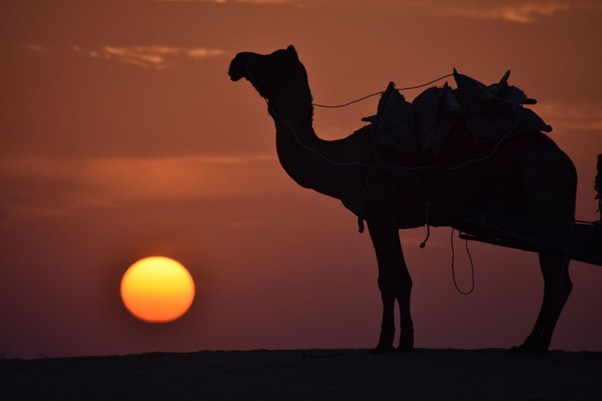
Most visits begin in the late afternoon, when the heat softens and the dunes glow in warm amber light. Camel safaris gently carry visitors across rippling sandscapes, while adrenaline seekers opt for thrilling jeep safaris that race over dunes and dip into sandy valleys. As the sun sinks below the horizon, the desert transforms into a painter’s palette of oranges, pinks, and purples — a moment that has everyone reaching for cameras and quiet awe.
Evenings at the Sand Dunes bring a completely different magic.
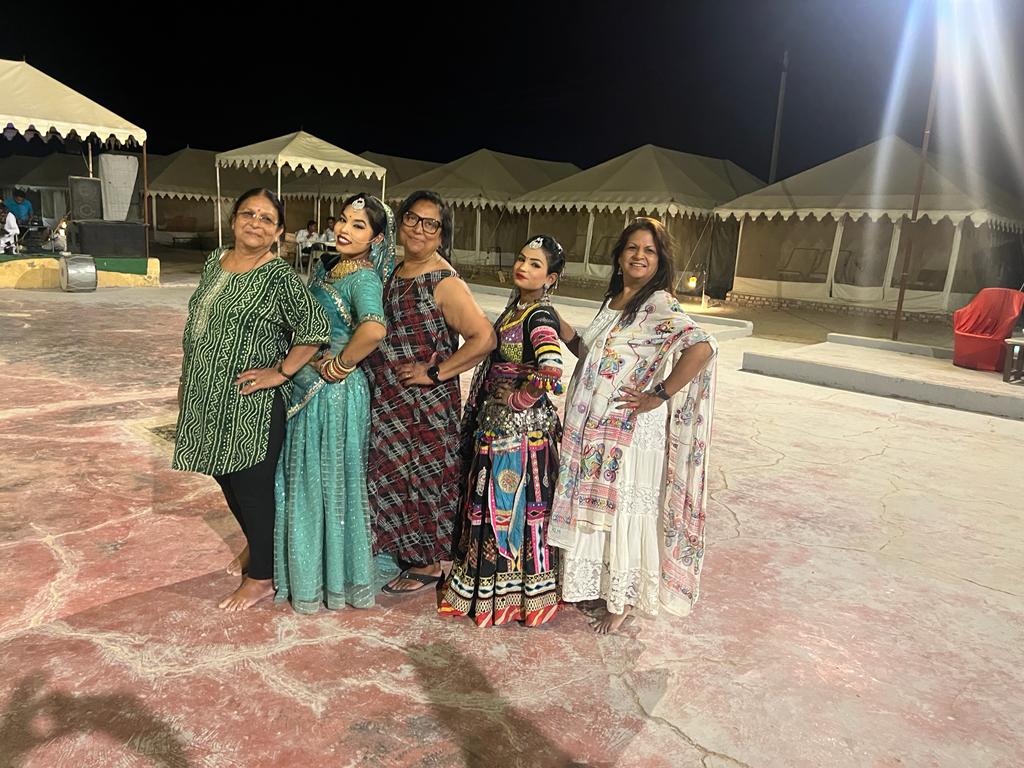
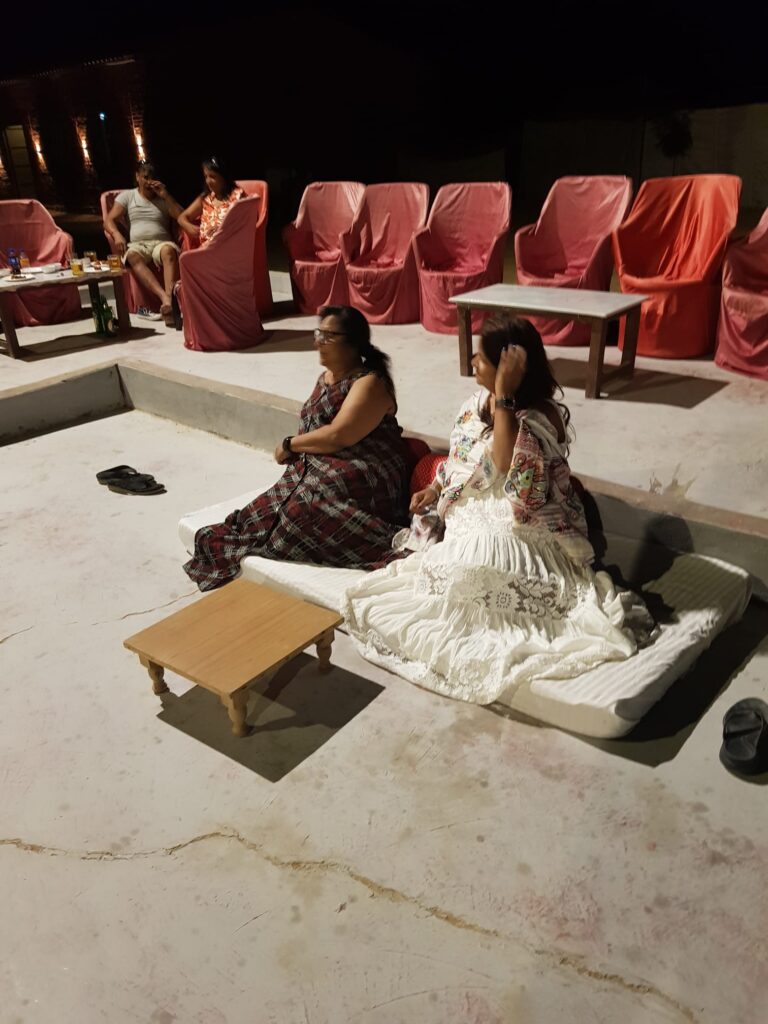
At traditional desert camps, tourists are welcomed with folk music, Kalbeliya dance performances, and Rajasthani hospitality. Under open skies, guests enjoy local cuisine, storytelling by firelight, and cultural shows that celebrate the spirit of the desert. When the music fades and the camp grows quiet, the real spectacle begins: a sky filled with stars, uninterrupted by city lights.
Accommodation ranges from comfortable Swiss tents to luxury desert camps, many offering private bathrooms, cozy bedding, and morning breakfasts with dune views. Waking up to the soft hush of desert winds and fresh chai feels like stepping into another world.
Beyond adventure and entertainment, the Sand Dunes offers something rarer — stillness. It’s a place to slow down, walk barefoot on warm sand, and reconnect with nature’s raw simplicity.
For tourists, this delivers the complete desert dream:
camel rides, sunset photography, cultural immersion, stargazing, and peaceful mornings wrapped in silence.
In essence, the Sand Dunes isn’t just a destination — it’s an experience that stays with you long after the sand is shaken from your shoes.
Here in the desert we enjoyed, the jeep safari and the amazing evening camel rides. At the camp itself live music and beautiful dancing kept us entertained. We also enjoyed the chilled beers and delicious food. As we were to leave very early in the morning we tucked into our tent beds feeling satisfied.